Untreated fuel
Complex hydrocarbon mixtures. Variable behaviour. Variable combustion potential.


MARITIME & SHIPPING
Fuel quality defines combustion quality.
Torque quality determines speed at RPM.
Lower engine load and more efficient torque improve propeller advance.
BEFORE THE INJECTOR OPENS
Re4mx conditions standards-compliant fuel before injection. Time in contact allows the fuel to behave more consistently when atomised, ignited and converted into pressure.
Complex hydrocarbon mixtures. Variable behaviour. Variable combustion potential.
Dose correctly. Allow a minimum 12-hour contact period. Optimise to the lowest effective add ratio.
More consistent atomisation, combustion and pressure development before useful work is measured.
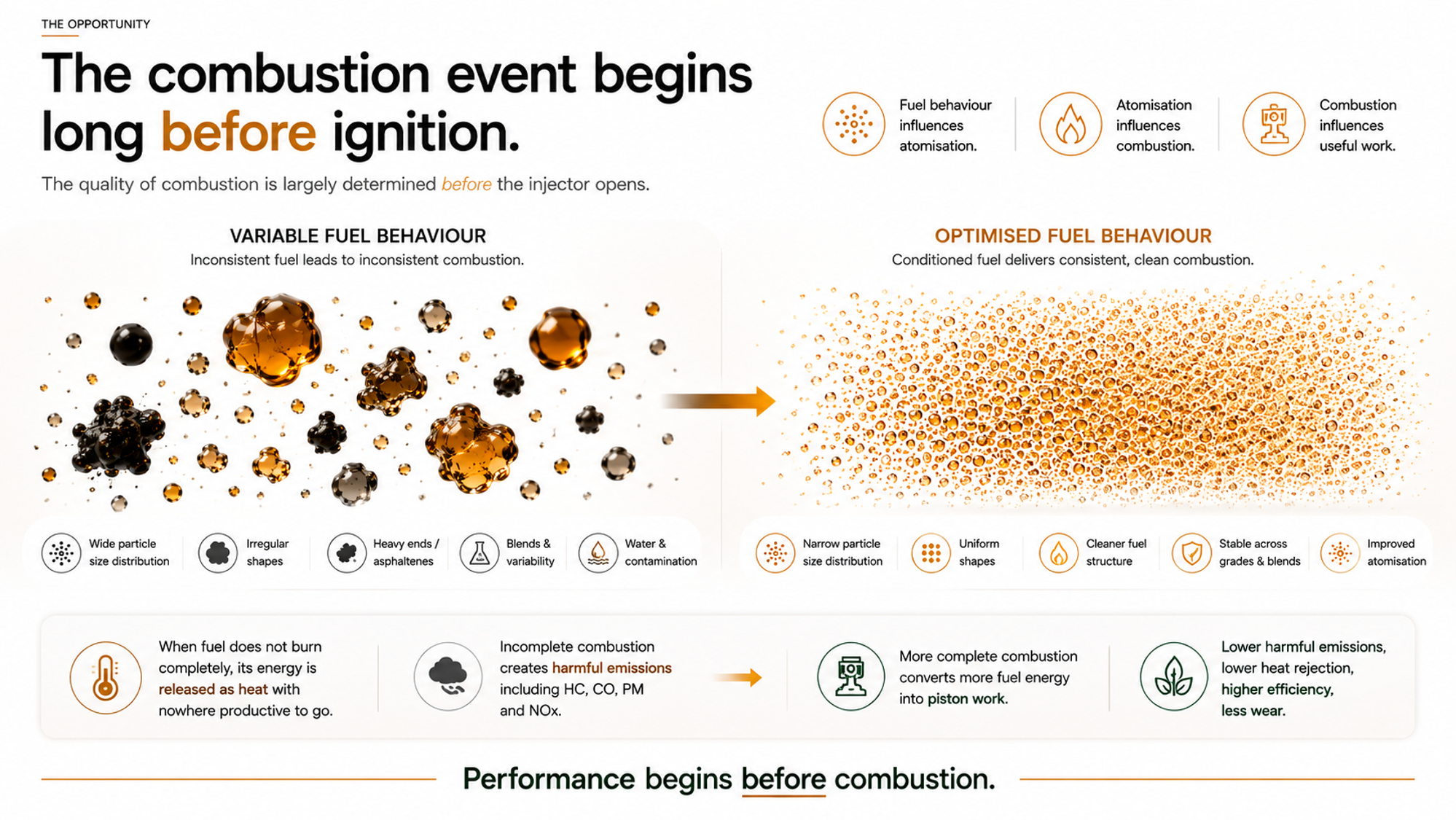
STANDARDS VS PERFORMANCE
A fuel either complies with the applicable specification and remains within the approved operating framework, or it does not. Compliance protects the engine. It does not tell you how uniformly the fuel will combust or how much useful work it will deliver.
THE ENERGY PATH
Each stage amplifies what happened before it. Improving behaviour at the start of the process improves the quality of the work delivered at the end.
LIVE PROPULSION MODEL
The animation compares variable torque delivery with a more uniform torque stream. The right-hand propeller maintains steadier angular velocity and a tighter, cleaner wake with less simulated cavitation.
DOWNSTREAM IMPACT
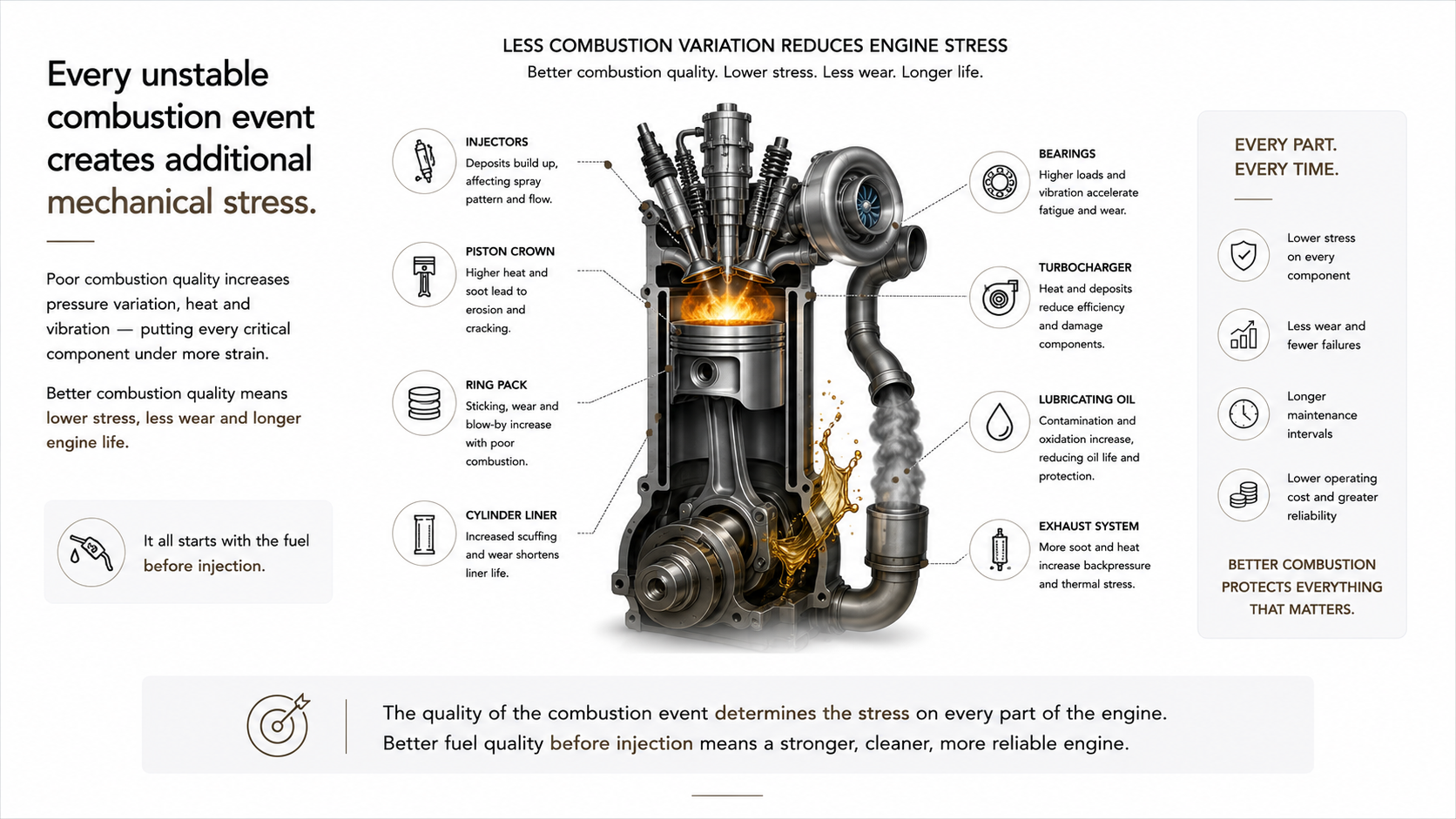
Less combustion variation reduces vibration, thermal stress, contamination and mechanical strain across the engine and driveline.
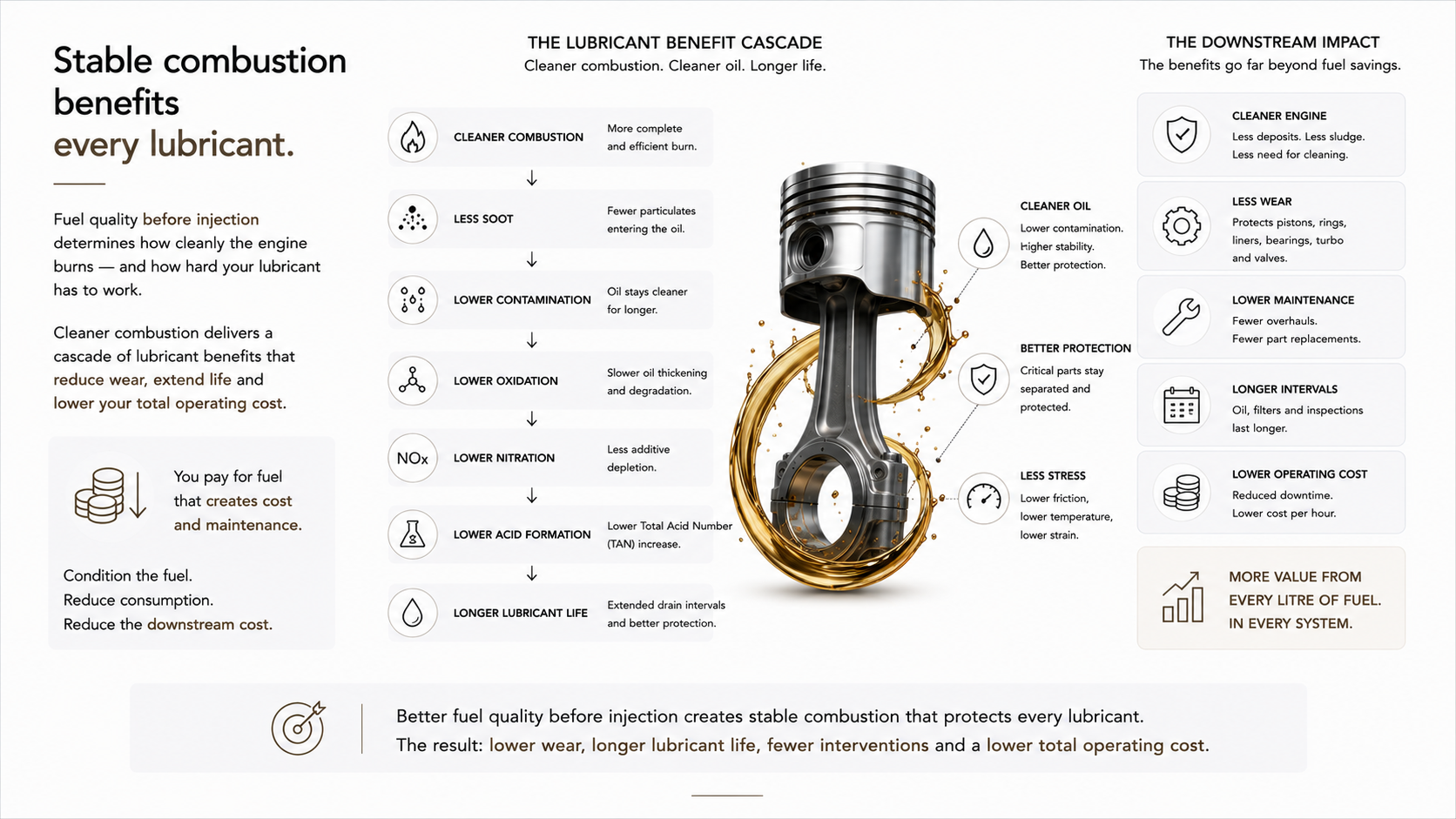
LUBRICANT BENEFIT CASCADE
Reduced soot, oxidation, nitration and acid formation can support longer lubricant life, better component protection and lower total operating cost.
MARITIME EVIDENCE
NEXT STEP
Start with a technical assessment built around the vessel, fuel, operating profile and available instrumentation.